

Are there any legal restrictions on the height of a logistics semi - trailer? Well, let me tell you, as a logistics semi - trailer supplier, this is a question I get a lot. And the answer isn't as straightforward as you might think.
First off, legal restrictions on semi - trailer height vary from country to country and even from state to state within some large countries like the United States. In the US, for example, the Federal Highway Administration sets some general guidelines, but individual states can have their own rules. Most commonly, the maximum height for a semi - trailer on US highways is around 13.5 feet (about 4.11 meters). This limit is in place for a bunch of reasons. Safety is a huge one. If a trailer is too tall, it can be more prone to tipping over, especially when taking turns or in high - wind conditions. Also, there are infrastructure considerations. Bridges, overpasses, and tunnels all have height clearances, and trailers need to fit under them safely.
In Europe, the situation is a bit more complex due to the number of different countries. The EU has some harmonized regulations, but again, member states can have additional rules. Generally, the maximum height for a commercial vehicle, including the semi - trailer, is around 4 meters. This standardization helps with cross - border transportation, making it easier for logistics companies to move goods across different countries without constantly having to worry about different height limits.
Now, why does this matter to me as a semi - trailer supplier? Well, it's all about making sure our customers get trailers that comply with the laws in the areas where they'll be operating. We offer a range of trailers, like the 3 Axle High Quality Sidewall Semi Trailer. This trailer is designed with height regulations in mind. It's built to be as efficient as possible while still staying within the legal height limits. We know that if a customer buys a trailer that's too tall for the roads they'll be using, it's not just a headache for them; it can also lead to fines and legal issues.
Another popular option we have is the Container Flatbed Semi Trailer. This type of trailer is great for transporting containers, but height is still a crucial factor. Containers come in different sizes, and we need to make sure that when they're loaded onto the trailer, the overall height stays within the legal limits. We work closely with our customers to understand their specific needs, including the types of containers they'll be carrying and the routes they'll be taking. That way, we can customize the trailer to meet all the requirements.
And then there's the Most Polpular 3 Axle Flatbed Semi Trailer. This trailer is a real workhorse in the logistics industry. It's versatile and can carry a wide variety of cargo. But just like the other trailers, we pay close attention to height regulations during the manufacturing process. We use high - quality materials and advanced engineering techniques to keep the trailer's height as low as possible without sacrificing its load - carrying capacity.
Sometimes, customers might want to push the limits a bit. Maybe they think they can get away with a slightly taller trailer or that they can find a workaround. But that's a risky move. Law enforcement agencies are cracking down on non - compliant vehicles, and the fines can be hefty. Not to mention the potential damage to the trailer and the cargo if it gets involved in an accident due to its height.
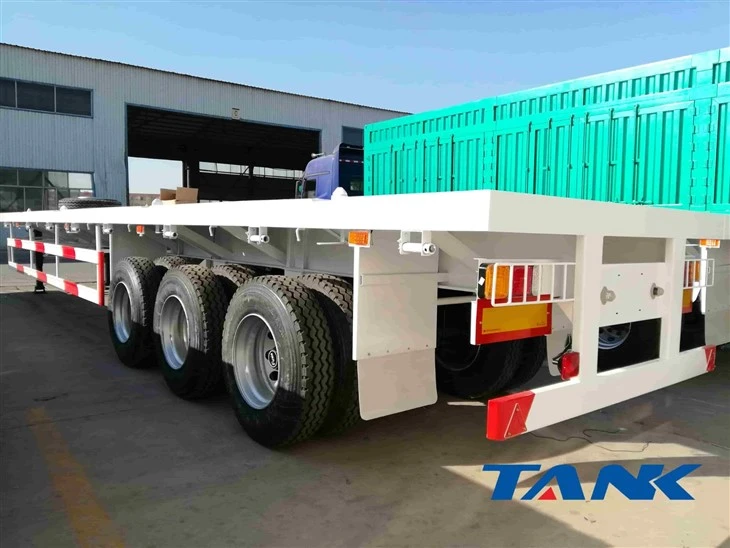

So, what do we do to ensure our trailers meet the legal height requirements? First, we stay up - to - date on all the latest regulations in different regions. Our research and development team is constantly monitoring changes in the law and adjusting our designs accordingly. We also have a strict quality control process. Every trailer that leaves our factory is thoroughly inspected to make sure it meets the specified height limits.
In addition to height, there are other factors that can affect a semi - trailer's compliance with the law. Weight is another big one. There are limits on how much a trailer can weigh, including the cargo it's carrying. And then there are rules about the length and width of the trailer. All these factors are interconnected, and we need to take them all into account when designing and manufacturing our trailers.
For example, if a customer wants a trailer with a larger load - carrying capacity, we need to find a balance between increasing the size of the trailer and keeping it within the legal limits for height, weight, length, and width. It's a bit like a puzzle, but our team of experts is really good at solving it.
If you're in the market for a logistics semi - trailer, it's important to choose a supplier who understands the legal requirements. You don't want to end up with a trailer that causes you problems down the road. That's where we come in. We've been in the business for years, and we have the experience and knowledge to provide you with a high - quality, compliant trailer.
Whether you need a 3 Axle High Quality Sidewall Semi Trailer, a Container Flatbed Semi Trailer, or the Most Polpular 3 Axle Flatbed Semi Trailer, we can help. We'll work with you to understand your specific needs and find the perfect trailer for your business.
If you're interested in learning more about our trailers or have any questions about legal restrictions, don't hesitate to get in touch. We're here to assist you with all your logistics semi - trailer needs. Let's start a conversation and see how we can help you take your business to the next level.
References
- Federal Highway Administration (USA)
- European Union Transport Regulations
- Various State and National Transport Laws


